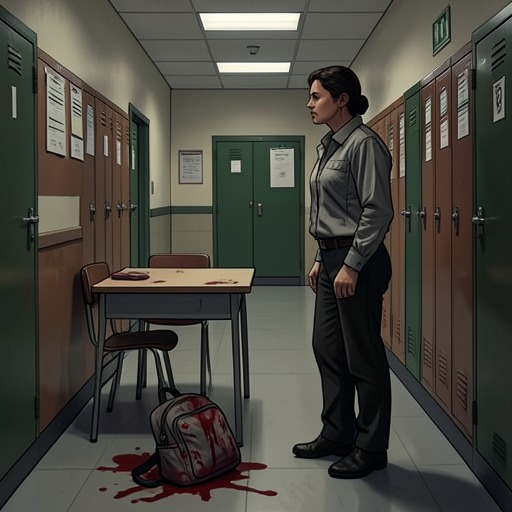
Matt Kellner’s crime-scene photographs
The ShardsMatt Kellner’s crime-scene photographs are images of Matt’s body shown to Bret Ellis by Matt’s father, Ronald Kellner, after Matt’s death. Their documented injuries conflict with the account of a drug-related episode and accidental drowning, but the photographs leave the cause of Matt’s death unresolved. They turn Bret’s suspicion into a claim grounded in what he has seen, without making that claim an independently confirmed explanation.
Discovery and Description
When Bret visits Ronald to ask whether Matt’s death was an accident in the pool, Ronald says that he and his family do not know what really happened. He brings Bret to his desk and explains that the photographs were taken by a crime-scene photographer he had called in. The collection includes views of Matt’s body from different angles, recording bruises and other injuries; Ronald also shows Bret an image of Matt’s face. The sequence makes the photographs a private disclosure, not an account Bret encounters through an official investigation.
Evidence and the Official Account
Ronald points to blood on the front seat and dashboard of Matt’s Datsun and to an injury to Matt’s arm as he describes the authorities’ theory: that Matt cut himself during a supposed psychotic episode. The official reconstruction attributed Matt’s death to drug use, a crisis, and drowning in the pool. Ronald also tells Bret that the autopsy report recorded aquarium contents in Matt’s stomach, a detail that deepens the strangeness of the account without explaining how those contents came to be there. Bret knows the aquarium had been empty for weeks, so the report and his knowledge do not fit together neatly.
Bret’s Response and Later Use
The photographs affect Bret not only as evidence but as records of a friend whose body he recognizes. He concludes that Matt’s injuries do not look accidental and later tells Dr. Croft that he saw both the autopsy report and what Ronald called the crime scene. Croft answers that the school has no connection to a death that occurred away from its grounds, and restates the official explanation rather than treating Bret’s account as the start of a criminal inquiry. The images therefore sharpen Bret’s challenge to the accepted story while also exposing how little institutional attention his evidence receives.
Limits and Narrative Significance
The photographs support the presence of injuries and preserve Ronald’s doubts, but they do not identify who caused them or settle how Matt died. Their force in the narrative rests on that gap: Bret’s direct viewing gives his suspicions a material basis, while the official explanation remains in place and the evidence is not shown to produce a resolution. As a private set of images, they connect bodily evidence, an autopsy account, and Bret’s increasingly contested effort to make others acknowledge that Matt may have been attacked.
Forensic Evidence and Its Gaps
The photographs record visible injuries, but their evidentiary reach is sharply limited. They show what Bret recognizes as bruising and wounds on Matt’s body; they do not establish who inflicted them, when they occurred, or whether they caused his death. Ronald’s account adds further pieces without closing that gap: blood was found across the front seat and dashboard of Matt’s Datsun, and authorities treated an injury to his arm as self-inflicted. The autopsy report, meanwhile, attributed Matt’s death to a sequence involving drugs and drowning, and recorded aquarium contents in his stomach. Bret knew the aquarium had been empty for weeks. Read together, the photographs, report, and family observations make the official reconstruction difficult for him to accept, but none independently supplies a complete alternative.
Institutional Reception
When Bret later tells Dr. Croft that he saw the photographs and that Matt’s death did not look accidental, Croft asks why Ronald showed him the material. Bret explains that he went to Matt’s house because nobody seemed to know what had happened, and he felt that people were unwilling to acknowledge that Matt had been attacked. Croft instead repeats the official account of a drug-related crisis followed by drowning and says Buckley has no connection to a death that occurred off campus. The exchange reveals the photographs’ limited institutional force: they strengthen Bret’s conviction, but do not prompt the school to reconsider its position or open an inquiry.
Narrative Significance
The photographs remain evidence of visible injuries rather than a definitive solution to Matt’s death. Bret’s direct encounter with them gives weight to his suspicion that Matt was attacked, yet neither the images nor the accounts accompanying them establish who was responsible or how the injuries relate to the drowning. Their significance lies in this unresolved gap: they make the official explanation harder for Bret to accept while showing how little his evidence alters the response around him.